



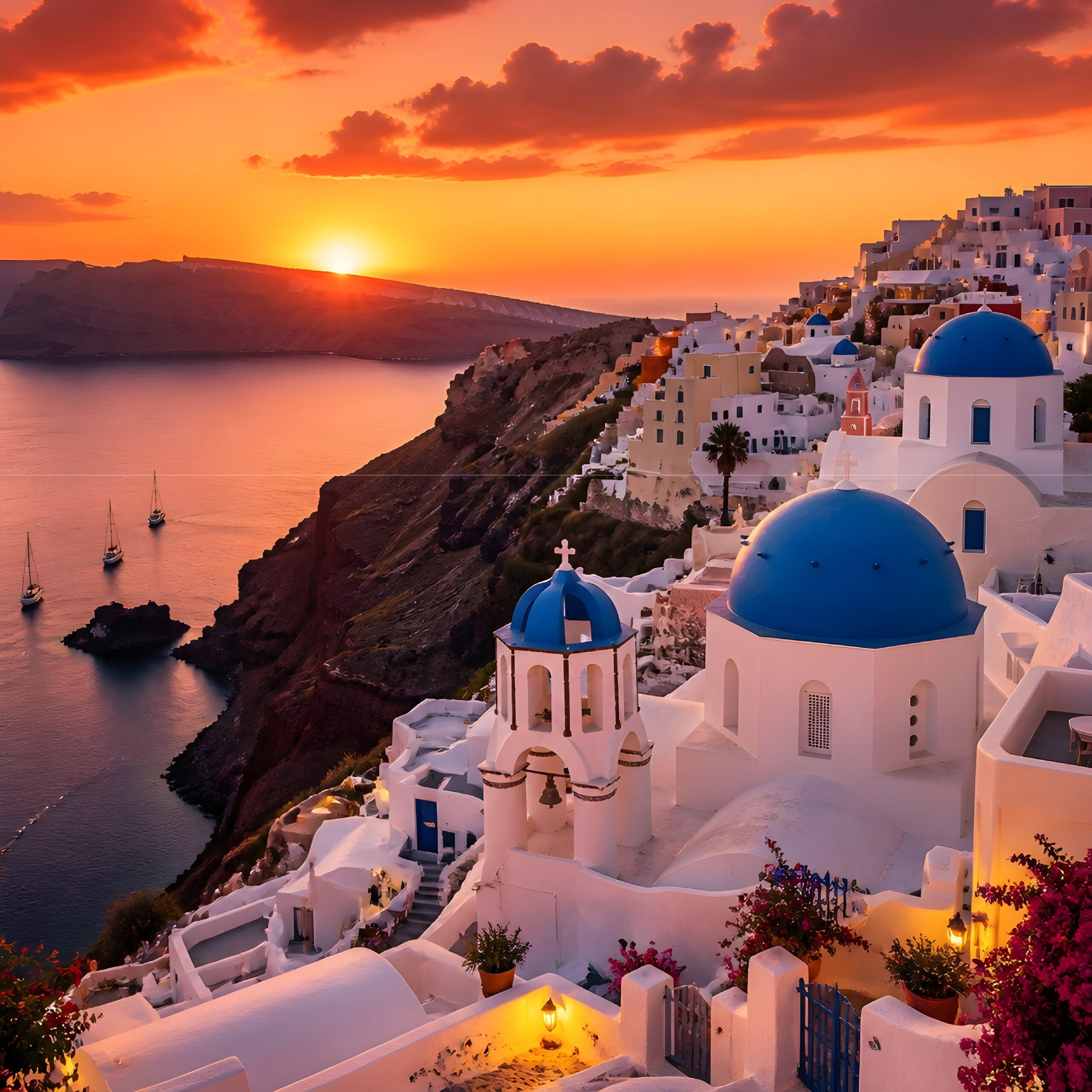
The marble of the Parthenon glows honey-gold in the late sun. A few days later you are watching that same sun melt into the Aegean from a whitewashed terrace in Santorini, glass in hand. Greece gives you both — the cradle of Western civilisation and the dream of the Mediterranean — in one trip.
A Greece tour is a journey through the foundations of our world and into some of the most beautiful islands on the planet. This guide takes you from the Acropolis in Athens to the birthplace of the Olympic Games at ancient Olympia, then out across the Aegean to the caldera views of Santorini and the buzzing charm of Mykonos. Here is how to experience the very best of mainland history and island magic.
The Parthenon crowning the Acropolis of Athens. Suggested free-stock search: “Acropolis Parthenon Athens”.
Athens and the Acropolis: Where the Western World Began
Every Greece tour starts in Athens, and every Athens visit centres on the Acropolis. Crowning the city on its rocky hill, the Parthenon has stood for nearly 2,500 years as the supreme symbol of classical Greece — the place where democracy, philosophy, and theatre were born. Climbing to the top and standing before those columns is a genuine pinch-yourself moment.
Below the citadel, the superb Acropolis Museum displays the sculptures and artifacts in context, while the historic Plaka neighbourhood tumbles down the slopes in a maze of cafes and tavernas.
Actionable tip: Visit the Acropolis right at opening or in the last hours before closing to avoid both the midday heat and the thickest crowds. Wear proper shoes — the ancient marble pathways are famously slippery and uneven.
Athens is the cultural anchor of the DV Holidays Greek Splendors itinerary, with expert guiding that turns the ruins into a living story.
Ancient Olympia: The Birthplace of the Games
Few places carry the weight of ancient Olympia. For over a thousand years, this was the site of the original Olympic Games, held every four years in honour of Zeus. Walking through the sanctuary today, you can still see the temple ruins, the workshop where the sculptor Pheidias created one of the Seven Wonders of the Ancient World, and — most movingly — the original stadium, where you can stand on the very starting line where athletes once raced.
Actionable tip: Do not skip the Archaeological Museum of Olympia next to the site — it houses extraordinary sculptures that bring the sanctuary to life. And yes, take the obligatory photo sprinting (or strolling) down the ancient stadium track; it is a tradition for a reason.
The Mainland Beyond Athens
Greece’s mainland holds far more than its capital. Depending on your route, a tour can take in the dramatic monasteries of Meteora perched atop towering rock pillars, the well-preserved theatre of Epidaurus with its perfect acoustics, the ancient citadel of Mycenae, and the oracle site of Delphi clinging to the slopes of Mount Parnassus.
Actionable tip: If your itinerary allows, build in at least one or two mainland sites beyond Athens before heading to the islands. They are far less crowded than the famous beaches and add real depth to your understanding of Greek history. A guided road tour is the easiest way to link them.

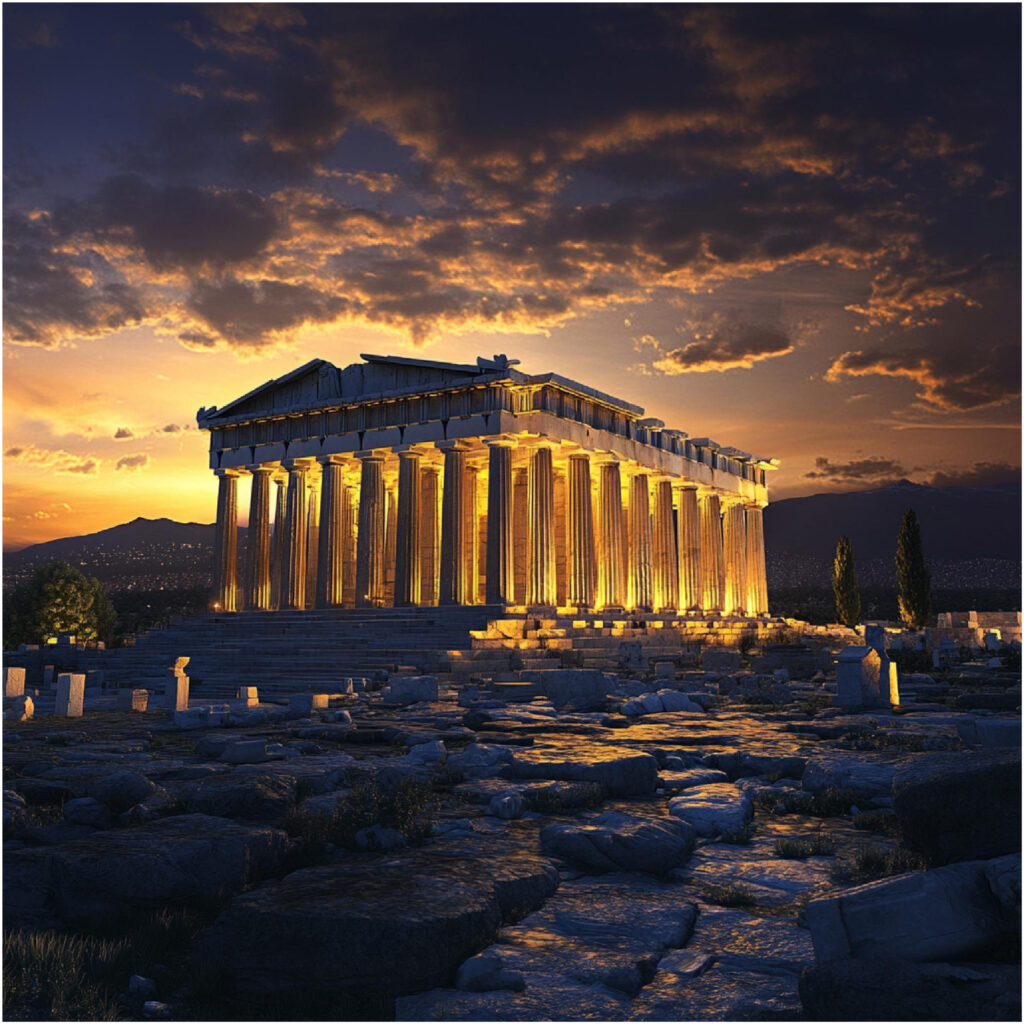
Santorini’s caldera villages at sunset — the postcard of the Greek islands. Suggested free-stock search: “Santorini caldera sunset”.
Santorini: The Island That Launched a Thousand Postcards
If you have ever pictured Greece, you have probably pictured Santorini: whitewashed villages and blue-domed churches clinging to cliffs above a deep blue caldera, formed by one of the largest volcanic eruptions in human history. The island is as romantic as its reputation, with dramatic sea views at every turn and the famous sunsets of Oia drawing crowds every evening.
Actionable tip: Everyone gathers in Oia for sunset, which is glorious but extremely crowded. For an equally stunning view with breathing room, watch the sunset from a terrace in Imerovigli or Firostefani, or book a sunset catamaran cruise around the caldera — arguably the best seat in the house.
Mykonos: Cosmopolitan Charm and Cycladic Beauty
Mykonos is Santorini’s livelier cousin — a glamorous island famous for its golden beaches, its iconic windmills, and the winding lanes of Mykonos Town (Chora), where bougainvillea spills over brilliant white walls. By day it is all beaches and boutiques; by night it has one of the most famous social scenes in the Mediterranean.
But there is quiet beauty here too, especially in the photogenic “Little Venice” quarter where colourful houses rise straight from the sea.
Actionable tip: Rent a quad bike or arrange a driver to explore the island’s quieter beaches away from the main hubs — Mykonos rewards those who venture beyond the central strip. Sunset drinks in Little Venice are a classic for a reason.
Both Santorini and Mykonos feature in the DV Holidays Greek Splendors With Island Hopping package, which pairs the mainland’s history with the Aegean’s most beloved islands.
Island Hopping: How to Do It Right
The joy of Greece is combining the mainland and the islands, and the ferry and flight network makes it wonderfully doable. High-speed ferries connect the mainland to the Cyclades and link the islands to each other, while domestic flights cover longer distances quickly.
Actionable tip: Don’t try to squeeze in too many islands — two or three nights each lets you actually relax rather than constantly packing and unpacking. Book inter-island ferries and accommodation well in advance for summer travel, as the popular routes and best hotels sell out early.
When to Go: Timing Your Greek Adventure
The shoulder seasons — May to June and September to October — are the sweet spot for a Greece tour. The weather is warm and ideal for both sightseeing and the beach, the sea is swimmable, and the crowds and prices are well below the July-August peak. High summer is hot and busy, especially on the islands; winter is quiet and atmospheric on the mainland but many island businesses close.
Actionable tip: Aim for late May, early June, or September. You will get island weather without the peak-season crush, and the archaeological sites are far more comfortable to explore without the midsummer heat. Let a specialist coordinate the ferries, flights, and timing so the mainland-to-island flow is seamless.
Greek Food and the Art of the Long Lunch
No Greece tour is complete without surrendering to the food. Greek cuisine is built on simple, sun-soaked ingredients — olive oil, ripe tomatoes, feta, grilled fish, herbs, and lemon — and it tastes best when eaten slowly. In Athens you will find sophisticated modern tavernas; on the islands, the joy is a long lunch by the harbour, plates arriving as they are ready, no one in any hurry to bring the bill.
Each region has its specialities, from Santorini’s tiny, intensely sweet cherry tomatoes and white aubergines to fresh-caught seafood grilled on the quayside in Mykonos. Pair it all with a crisp local white wine or a glass of ouzo, and you begin to understand the Greek way of life.
Actionable tip: Eat where the locals eat — a few streets back from the main square or harbour usually means better food and fairer prices. Order a spread of small plates (mezedes) to share rather than a single main each; it is more fun, more varied, and exactly how Greeks themselves dine. And embrace the late Greek dinner hour; restaurants often don’t get going until well after 8pm.
A long harbourside lunch — the heart of Greek island life. Suggested free-stock search: “Greek taverna food harbour”.
Beyond the Icons: Crete, Rhodes and the Quieter Islands
Santorini and Mykonos are the famous faces of the Greek islands, but Greece has around 200 inhabited islands, and some of the most rewarding are the lesser-known ones. Crete, the largest, is almost a country unto itself, with Minoan palaces, dramatic gorges, mountain villages, and superb food. Rhodes blends a remarkably intact medieval old town with beaches and ancient sites. And the smaller Cyclades — Naxos, Milos, Paros — offer the same whitewashed beauty as their famous neighbours with a fraction of the crowds.
For travelers who have done the icons before, or who simply prefer a slower pace, these islands are where the authentic, unhurried Greece still thrives.
Actionable tip: If this is your first trip, pair one famous island with one quieter one — for example Santorini for the views and Naxos or Milos for relaxed beaches and local life. It gives you the postcard moments and the genuine, lived-in island experience in a single itinerary. A specialist can match the islands to your travel style and connect them efficiently by ferry or flight.
History and Paradise, in One Trip
Greece is the rare destination that satisfies both the mind and the soul. You stand where democracy was born and where Olympians raced, then you sail out to islands that look like a daydream and watch the most beautiful sunsets of your life.
The takeaways: anchor your trip in Athens and the Acropolis, add ancient Olympia and the mainland sites for depth, pair Santorini’s views with Mykonos’s energy, keep your island count modest, and travel in the shoulder season for the perfect balance.
Ready to discover Greece, ancient and island?
Explore the Greek Splendors and Greek Splendors With Island Hopping packages at dvholidays.com, or email reservations@dvholidays.com to plan your Greek adventure.


