



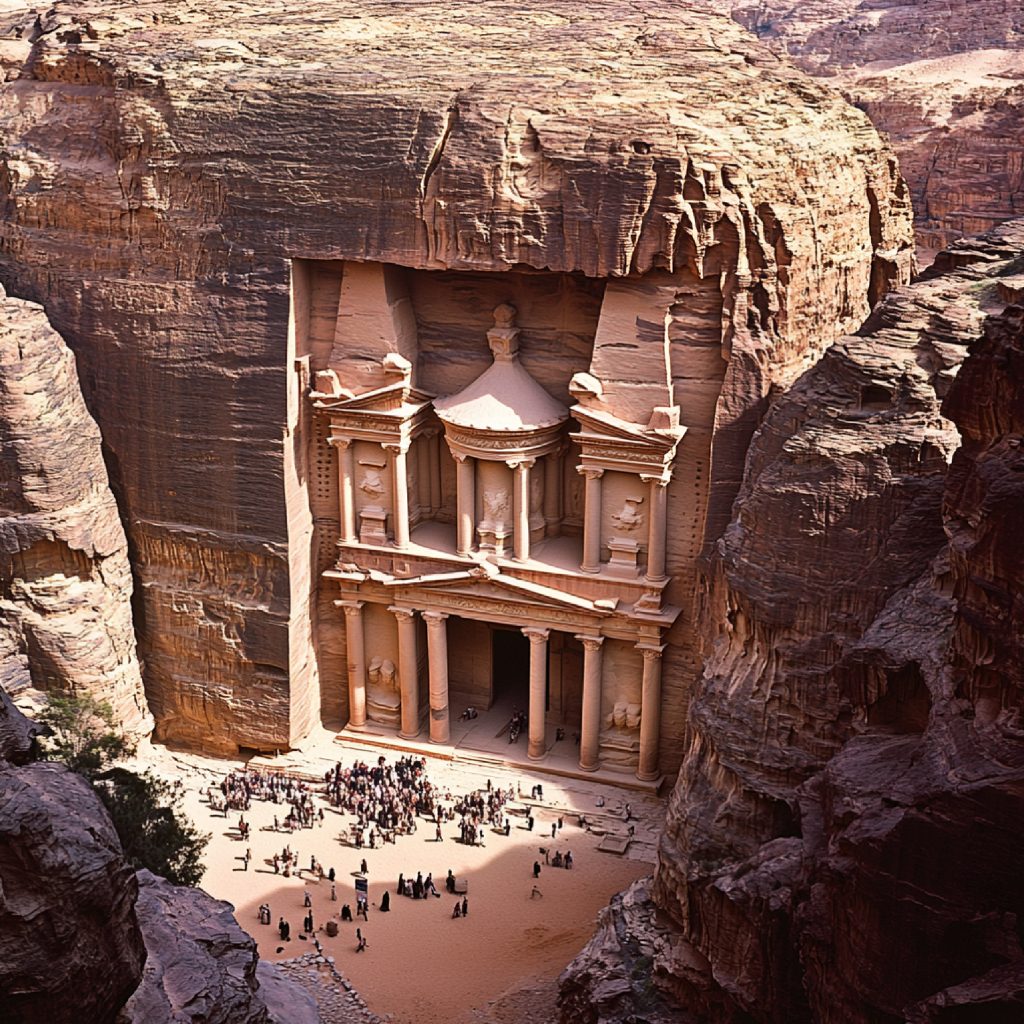
You walk for twenty minutes through a narrow canyon, walls of rock towering on either side. Then the gorge splits open, and there it is: a vast temple facade carved straight into a cliff of rose-coloured stone. This is your first sight of Petra’s Treasury, and it stops you dead.
Jordan is one of the Middle East’s most rewarding and welcoming destinations — a compact country packed with world-class wonders and famous for the warmth of its people. A single tour can take you from the lost city of Petra to the sprawling Roman ruins of Jerash, the surreal desert of Wadi Rum, and the weightless float of the Dead Sea. This guide walks you through every highlight and shows you how to fit them into one seamless, unforgettable journey.
Petra’s Treasury revealed at the end of the Siq. Suggested free-stock search: “Petra Treasury Siq”.
Petra: The Rose-Red City Half as Old as Time
Petra needs no introduction, yet nothing prepares you for it. Carved into sandstone cliffs by the Nabataeans more than 2,000 years ago, this ancient trading capital was named one of the New Seven Wonders of the World in 2007 and is a UNESCO World Heritage Site. The Victorian poet John William Burgon immortalised it as a rose-red city half as old as time
— and the description still fits.
Most visitors know the Treasury, but Petra is enormous. Beyond it lie hundreds of tombs, a Roman-style theatre, colonnaded streets, and the spectacular Monastery, reached by a climb of some 800 steps but rewarded with one of the great views in the Middle East.
Actionable tip: Give Petra at least two days, not the rushed single day many people allow. Arrive early to walk the Siq before the crowds, and make the climb to the Monastery in the cooler late afternoon when the light on the stone is at its most golden.
Petra is the centrepiece of both the DV Holidays Experience Jordan and Royal Jordan itineraries, with expert local guides who unlock its history.

Petra by Night: A Different Kind of Magic
On select evenings, the path through the Siq to the Treasury is lit by thousands of candles, and the facade is bathed in soft light while traditional music drifts through the canyon. “Petra by Night” is a quieter, more atmospheric way to experience the site — and a beautiful contrast to the daytime visit.
Actionable tip: Check which evenings the candlelit event runs and build your Petra stay around it. It is worth planning your overnight in nearby Wadi Musa so you can experience both the daytime grandeur and the night-time enchantment.
Jerash: One of the World’s Best-Preserved Roman Cities
If Petra is Jordan’s most famous site, Jerash is its most underrated. North of Amman lies one of the largest and best-preserved provincial Roman cities anywhere outside Italy. Walking through its monumental arch, you enter a remarkably complete ancient city: a vast oval forum ringed by columns, colonnaded streets still marked by chariot ruts, grand temples, and two theatres.
Actionable tip: Wear good walking shoes and bring sun protection — Jerash is large and largely unshaded. Stand in the South Theatre and test the famous acoustics; a whisper from the stage carries clearly to the top rows, a small thrill that brings the ruins to life.
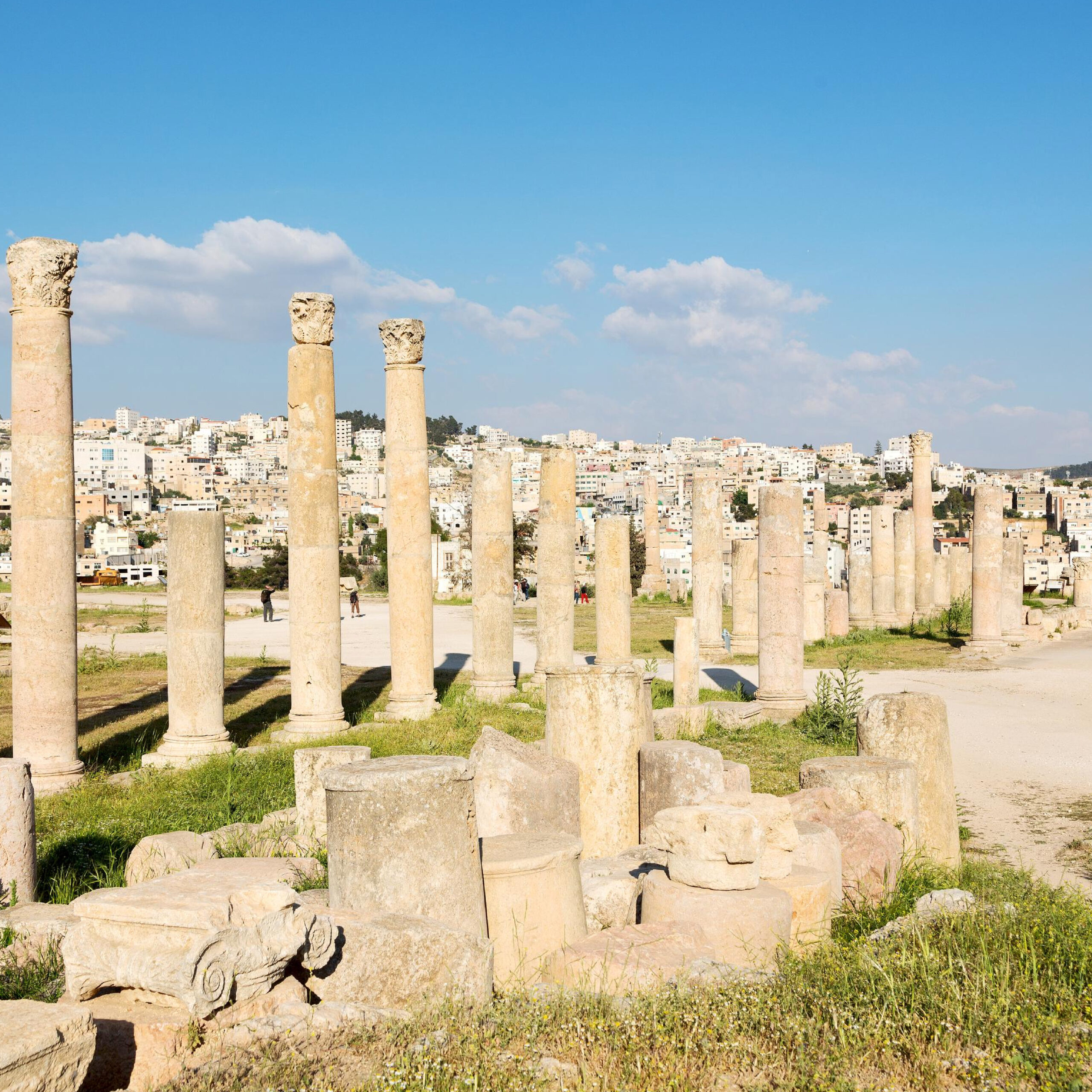
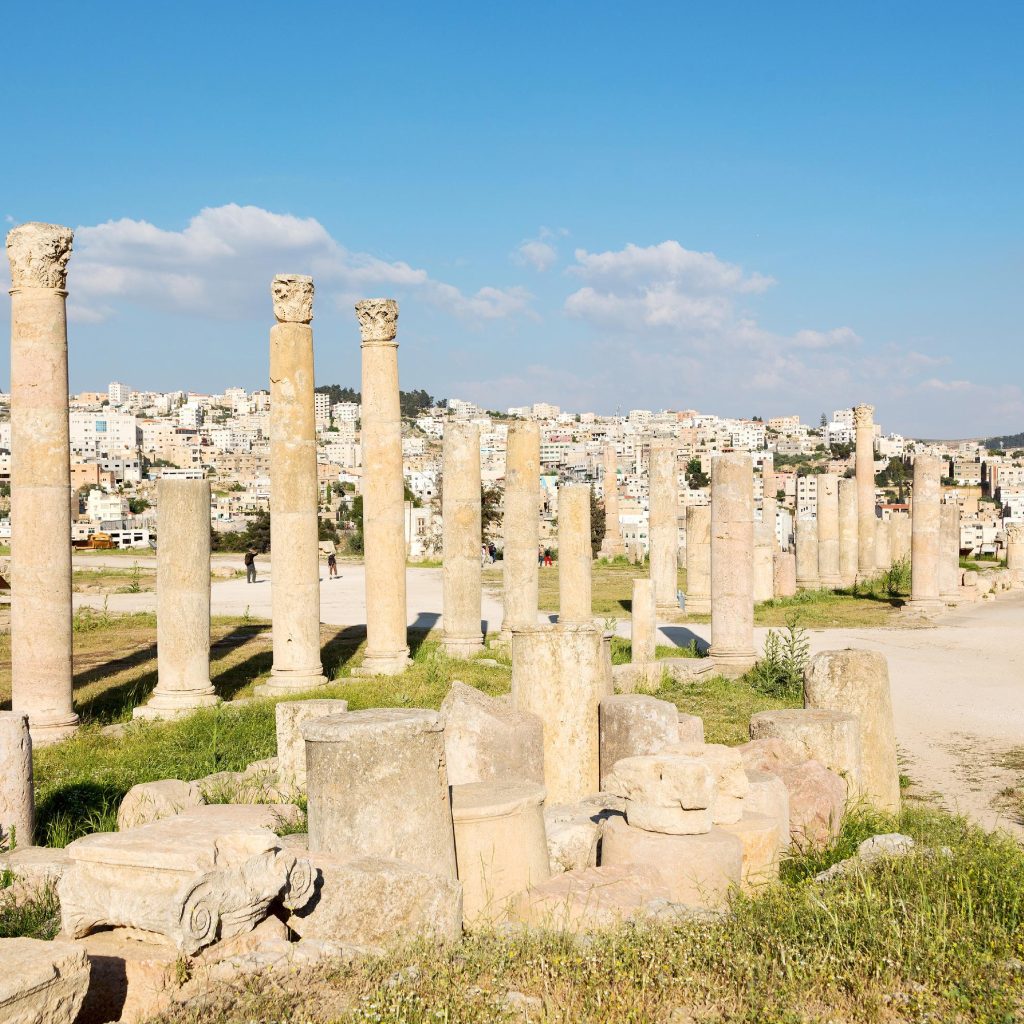
The colonnaded forum of Jerash, a Roman city frozen in time. Suggested free-stock search: “Jerash Roman ruins Jordan”.
The Dead Sea: Float at the Lowest Point on Earth
The Dead Sea is one of the most surreal experiences in travel. At the lowest point on the surface of the earth, its water is so dense with salt and minerals that you cannot sink — you simply float, bobbing on the surface like a cork. The famous mineral-rich black mud is prized for its skin benefits, and a coating-then-rinse is practically a rite of passage.
Actionable tip: Do not shave the day before, and keep the water away from your eyes — the salt stings fiercely. Wear water shoes for the sharp salt crystals underfoot, float on your back for the classic photo, and rinse off in fresh water afterward. Resorts along the shore make an ideal relaxing finale to a tour.
Wadi Rum: A Desert Out of a Movie
Often called the Valley of the Moon, Wadi Rum is a vast desert of towering sandstone mountains, red dunes, and natural arches that has stood in for alien worlds in countless films. T. E. Lawrence (of “Lawrence of Arabia” fame) passed through here, and the landscape feels both timeless and otherworldly.
Explore by 4×4 with a Bedouin guide, ride a camel across the sands, and — best of all — spend a night at a desert camp under a sky thick with stars.
Actionable tip: An overnight in a Wadi Rum camp is the single most magical experience in Jordan for many travelers. Choose a camp positioned away from the main cluster for darker skies, and time your jeep tour for late afternoon when the low sun sets the red rock ablaze. This desert adventure features prominently in the Royal Jordan package.
Amman, Mount Nebo and More
Jordan’s friendly capital, Amman, blends ancient and modern, with a hilltop Citadel and a Roman theatre at its heart. Nearby lie a wealth of biblical and historical sites: Mount Nebo, where Moses is said to have viewed the Promised Land; the mosaic city of Madaba with its famous ancient map; and the desert castles to the east.
Actionable tip: Use Amman as a launch pad and build in Madaba and Mount Nebo as an easy half-day or day trip — they sit conveniently on the route south toward Petra and the Dead Sea, so you lose no time doubling back.
When to Go and How to Travel
Spring (March to May) and autumn (September to November) are the best times for a Jordan tour, with warm days and cool evenings ideal for exploring Petra and the desert. Summer is hot, especially in Wadi Rum and at the Dead Sea, while winter can be cold and occasionally wet in the highlands.
Jordan is compact, safe for tourists, and easy to traverse — the famous Desert Highway and the scenic King’s Highway link the major sites, making a well-planned loop very achievable.
Actionable tip: A classic route runs Amman → Jerash → the King’s Highway sites → Petra → Wadi Rum → the Dead Sea. Travel in spring or autumn, and let a specialist arrange the guiding, transfers, and overnight stops so the journey flows effortlessly. The DV Holidays Experience Jordan package is built around exactly this circuit.
Jordanian Food and Bedouin Hospitality
Jordanians are famous for their generosity, and you feel it most around the table. The national dish, mansaf — tender lamb cooked in a tangy fermented-yoghurt sauce and served over rice and flatbread — is a celebration in itself, traditionally shared from a communal platter. Add fresh meze, smoky grilled meats, warm bread, and endless cups of cardamom-scented coffee and sweet tea, and you have a cuisine that is all about sharing.
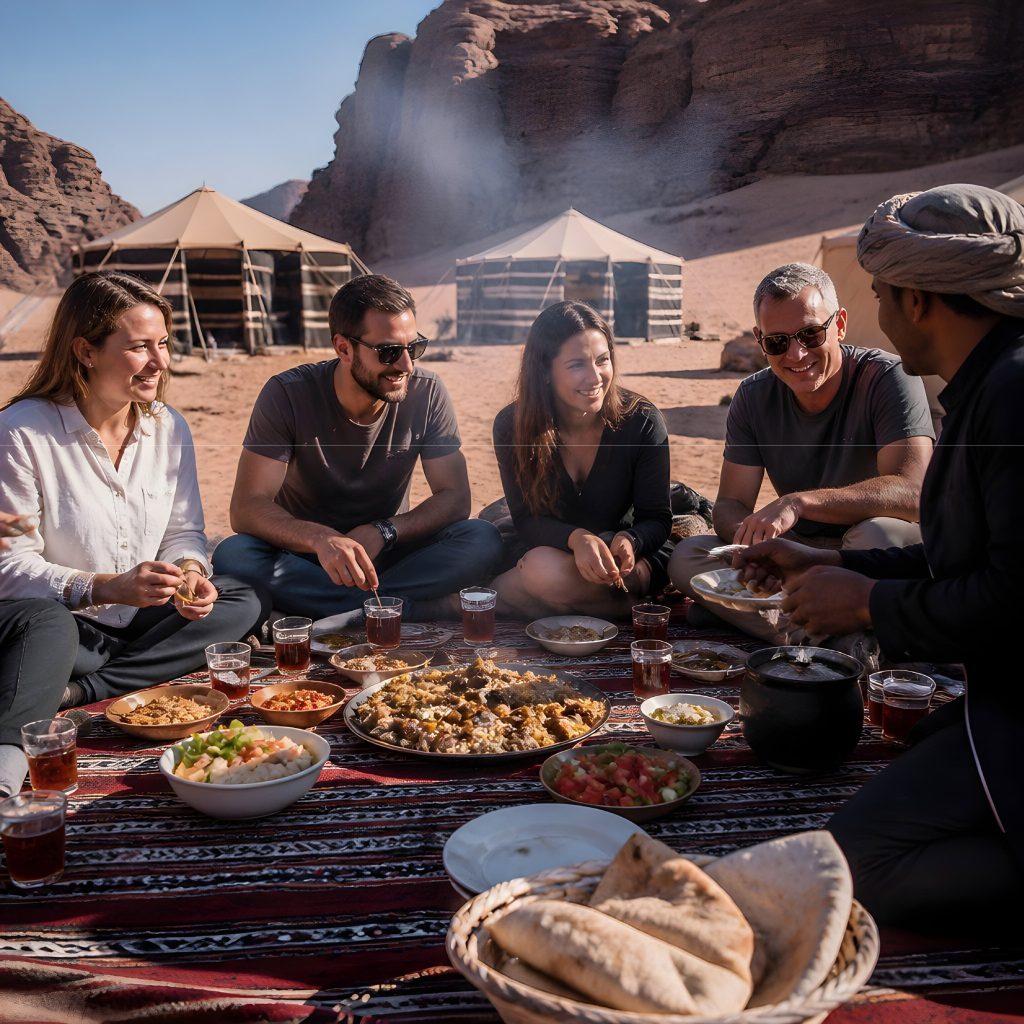
The most memorable meal of all may come in the desert. At a Wadi Rum camp, dinner is often a zarb — meat and vegetables slow-cooked in an underground sand oven, then unearthed in a cloud of fragrant steam and shared beneath the stars with your Bedouin hosts.
Actionable tip: Say yes to the invitations — if a host offers coffee or tea, accepting is part of the culture and a lovely way to connect. Try mansaf at least once, ideally in a local restaurant rather than a hotel, and don’t fill up before a Bedouin camp dinner; the desert feast is one of Jordan’s great experiences.
A shared feast at a Wadi Rum desert camp. Suggested free-stock search: “Bedouin dinner Wadi Rum camp”.
How Many Days in Jordan? A Sample Itinerary
Because Jordan is so compact, you can experience an astonishing amount in a relatively short trip. Most travelers find that a week to ten days is the sweet spot — enough to see the headline wonders without rushing, while leaving room for the slow, sociable moments that make the country special.
A classic route flows logically from north to south: arrive in Amman and explore the capital and nearby Jerash; head south along the historic King’s Highway, stopping at Madaba and Mount Nebo; spend two days at Petra, including Petra by Night; continue to Wadi Rum for a 4×4 tour and an overnight desert camp; and finish by unwinding at a Dead Sea resort before flying home. It is a journey that builds beautifully, saving some of the most relaxing experiences for the end.
Actionable tip: Resist the temptation to cram Jordan into three or four days — it is doable, but you will spend it racing between sites. If your schedule is tight, a specialist can combine Jordan with a nearby destination or design a focused short itinerary that still does Petra and Wadi Rum justice rather than skimming everything.
Small Country, Endless Wonder
Jordan punches far above its size. In little more than a week you can walk into the lost city of Petra, roam a complete Roman metropolis, float on the Dead Sea, and sleep beneath the stars in one of the world’s most cinematic deserts — all wrapped in the legendary hospitality the country is known for.
The takeaways: give Petra at least two days and see it by night, don’t miss underrated Jerash, float (carefully) on the Dead Sea, sleep out in Wadi Rum, and travel in spring or autumn with an expert handling the logistics.
Ready to discover the wonders of Jordan?
Explore the Experience Jordan and Royal Jordan packages at dvholidays.com, or email reservations@dvholidays.com to start planning your Jordan tour.


