

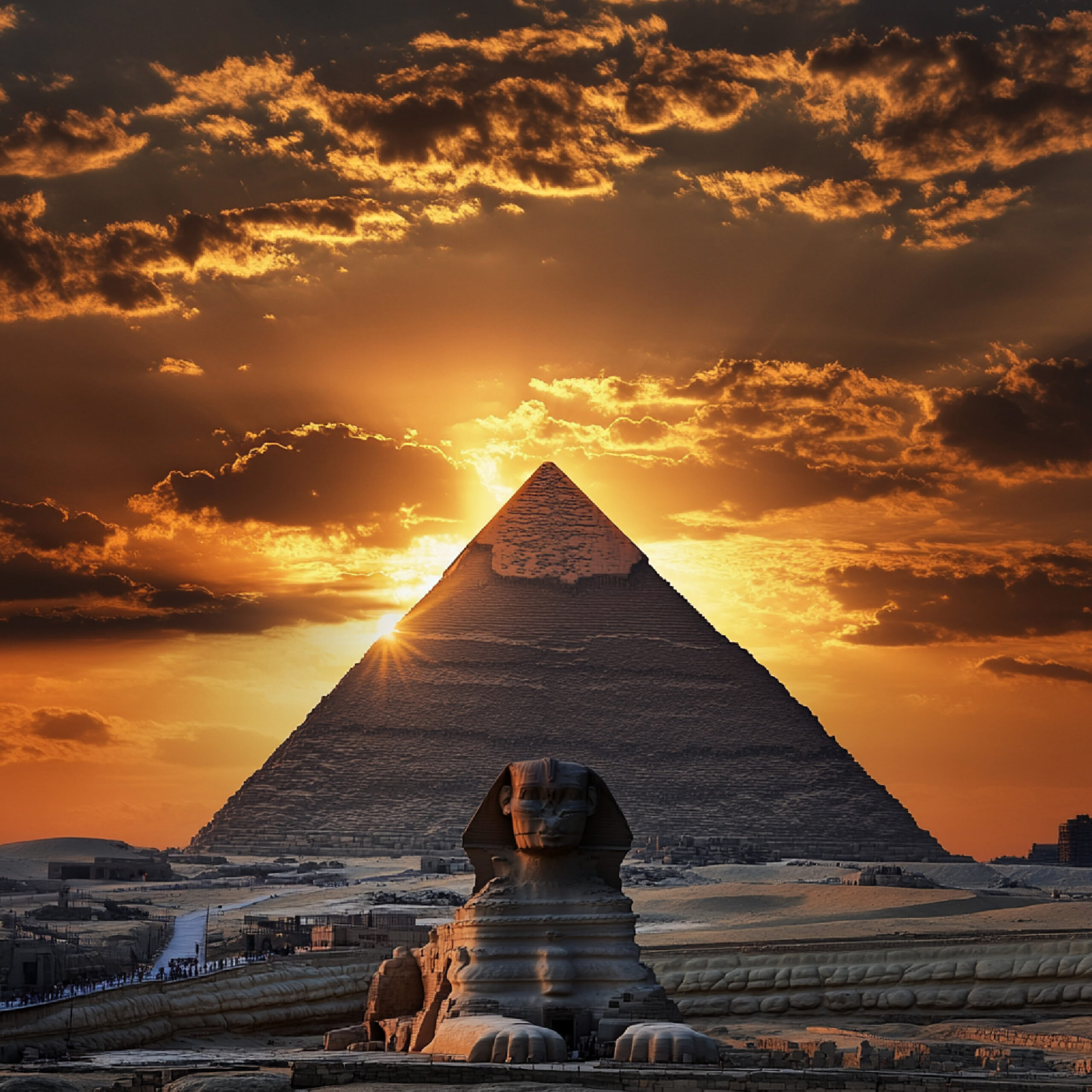
Stand at the foot of the Great Pyramid and your sense of scale simply breaks. These stones were already 2,000 years old when Cleopatra ruled. They were ancient history to the Romans. And they are still here, waiting for you.
Egypt has been the world’s greatest open-air museum for millennia, and right now there has never been a better time to visit. With the long-awaited Grand Egyptian Museum finally open in full, a classic Egypt tour now connects the Pyramids of Giza, the treasures of Tutankhamun, and a slow, luxurious cruise down the Nile into one seamless journey through 5,000 years of human achievement. Here is how to make the most of every chapter.
The Pyramids of Giza — the last surviving wonder of the ancient world. Suggested free-stock search: “Pyramids of Giza sunset”.
The Great Pyramids of Giza: The Last Ancient Wonder Standing
Let’s start where every Egypt journey should: on the Giza Plateau, just outside Cairo. The Great Pyramid of Khufu is the only one of the original Seven Wonders of the Ancient World still standing, and seeing it in person reduces even seasoned travelers to silence. Alongside it stand the pyramids of Khafre and Menkaure, and the enigmatic Great Sphinx keeping its eternal watch.
What surprises most first-time visitors is how close the pyramids sit to the modern city — and how much bigger they feel up close than in any photograph.
Actionable tip: Arrive at opening time to beat both the heat and the crowds, and consider buying the separate ticket to go inside a pyramid if you are not claustrophobic. For the best photographs, head to the panorama point on the plateau’s edge where you can frame all three pyramids together.
The Giza Plateau is the centrepiece of the DV Holidays Egyptian Splendors itinerary, with expert Egyptologist guides who turn a pile of ancient stone into a vivid, living story.
The Grand Egyptian Museum: A Brand-New World Wonder
This is the headline reason to visit Egypt right now. After decades in the making, the Grand Egyptian Museum (GEM) near the Giza Plateau opened in full in November 2025, and it is staggering — the largest archaeological museum complex in the world, purpose-built to house tens of thousands of artifacts spanning the entire sweep of ancient Egyptian history.
The crown jewel is the complete collection of Tutankhamun — for the first time ever, the boy king’s entire treasure of nearly 6,000 items is displayed together under one roof, including the famous golden funerary mask. A soaring atrium, a grand staircase lined with monumental statues, and galleries flooded with natural light make this as much an architectural experience as a historical one.
Actionable tip: Allow at least half a day, and ideally more — the museum is enormous and rushing it would be a shame. Pre-booking timed entry is strongly recommended now that it has become one of the most visited cultural sites on earth.
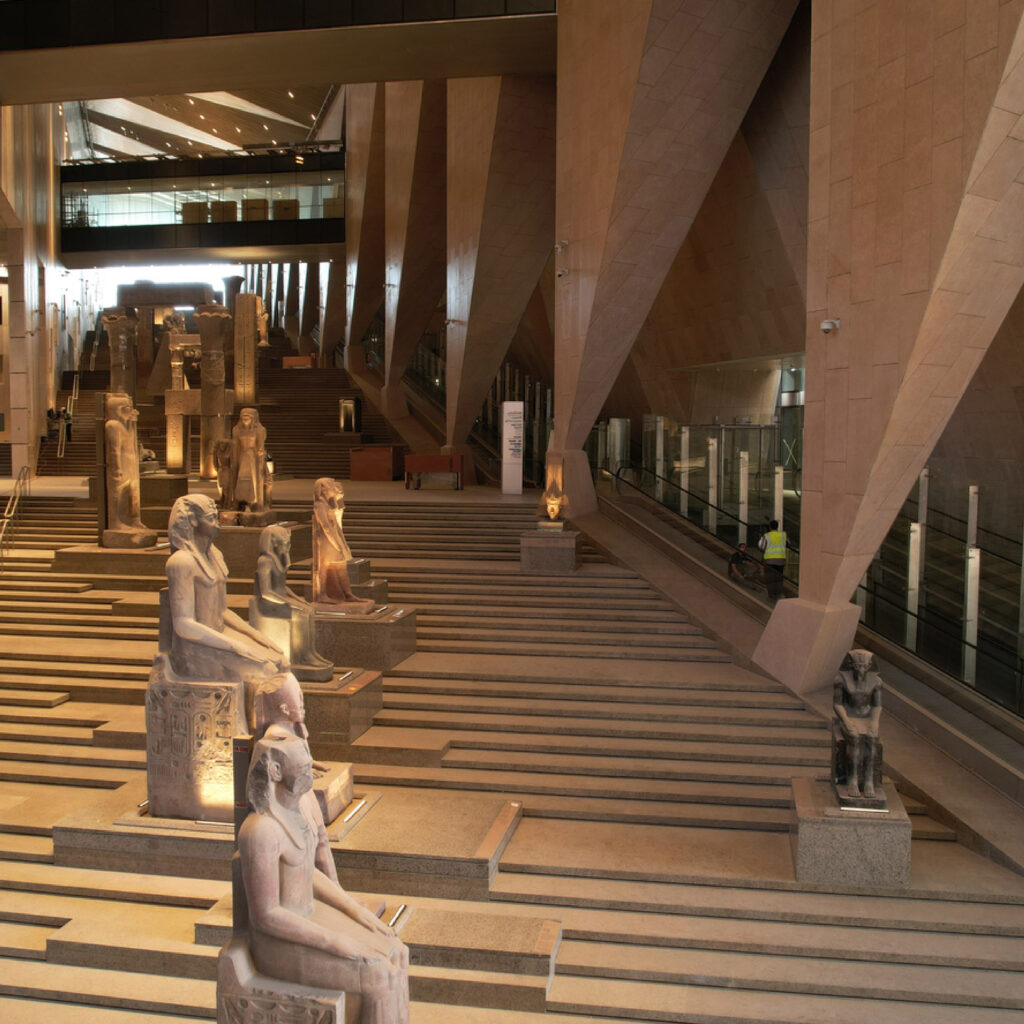
Inside the Grand Egyptian Museum, the world’s largest archaeological museum. Suggested free-stock search: “Grand Egyptian Museum interior”.
Cruising the Nile: 5,000 Years at a Gentle Pace
The Nile is not just a river; it is the reason Egyptian civilisation exists at all. A Nile cruise between Luxor and Aswan remains the most magical way to experience the country, gliding past palm groves, sandbanks, and timeless village scenes while the great temples reveal themselves one by one along the banks.
Days are spent ashore exploring monuments and afternoons drift by on the sun deck, watching a landscape that has barely changed since the pharaohs. It is the rare kind of travel that is both action-packed and deeply restful.
Actionable tip: A three-to-four-night cruise between Luxor and Aswan hits the highlights without feeling rushed. Choose a smaller, higher-quality vessel over a giant floating hotel — the service is more personal and the moorings are often better positioned.
The DV Holidays Pharaohs Insight & Dynasties package is built around exactly this Luxor-to-Aswan cruise, pairing the river with the country’s most important temple sites.
Luxor: The World’s Greatest Open-Air Museum
Ancient Thebes — modern Luxor — holds an astonishing concentration of monuments. On the east bank, the colossal temple complex of Karnak and the elegant Luxor Temple dazzle with their forests of columns. On the west bank lies the Valley of the Kings, where pharaohs including Tutankhamun were buried in elaborately painted tombs cut deep into the rock.
Actionable tip: Visit the Valley of the Kings as early as possible — the tombs get hot and busy fast. Many tickets cover a selection of tombs, so ask your guide which ones currently have the best-preserved, most colourful wall paintings, as the rotation of open tombs changes.
Aswan and Abu Simbel: The Soul of the South
Aswan is Egypt’s most relaxed and beautiful city, where the Nile is dotted with islands and white-sailed feluccas drift in the breeze. From here, many travelers make the journey to Abu Simbel, where Ramesses II carved two colossal temples directly into a mountainside — a site so monumental it was famously relocated stone by stone to save it from the rising waters of Lake Nasser.
Actionable tip: Take a sunset felucca ride around Aswan’s islands — it is one of the most peaceful, memorable experiences in all of Egypt. If Abu Simbel is on your list, it can be reached by a short flight or an organised road convoy; build it in as a dedicated excursion rather than an afterthought.
When to Visit and What to Expect
Egypt’s peak season runs from October to April, when temperatures are comfortable for sightseeing and the famous sites are at their most pleasant. The summer months are hot — very hot in the south — but they bring lower prices and thinner crowds for travelers who can handle the heat with early starts.
Actionable tip: If you visit in the cooler months, pack layers: mornings and evenings can be surprisingly cool, especially on the river and in the desert. Lightweight, modest clothing that covers shoulders and knees is both sun-smart and respectful at religious and traditional sites.
Travelling Smart: Guides, Logistics, and Etiquette
Egypt rewards travelers who go with knowledgeable guides. The history is so deep and layered that the difference between glancing at a temple and truly understanding it comes down to the person standing beside you explaining it. Internal flights between Cairo, Luxor, and Aswan save valuable time, and a good operator handles tickets, transfers, and timing so you are never caught out.
Actionable tip: Carry small bills for tipping (known locally as baksheesh), stay hydrated, and don’t try to cram everything into too few days. A well-paced 8-to-10-day itinerary covering Cairo, the GEM, Luxor, a Nile cruise, and Aswan is far more rewarding than a frantic dash.
The DV Holidays The Pharaonic Experiences package brings all these elements together with Egyptologist-led guiding and seamless internal logistics.
Beyond the Classics: The Red Sea and Egyptian Hospitality
While the Pyramids, the Nile, and the temples are the heart of any Egypt tour, the country rewards those who add a little more. Many travelers extend their trip with a few days on the Red Sea coast, where resorts at Hurghada and beyond offer world-class diving and snorkelling over vibrant coral reefs — the perfect way to unwind after a fast-paced history itinerary.
And throughout, it is the people who leave the deepest impression. Egyptian hospitality is famous: expect endless cups of sweet tea, warm welcomes, and a genuine pride in sharing the country’s heritage. Food is part of that warmth, from street-side koshari to fragrant tagines and fresh-baked flatbread.
Actionable tip: If you have the time, tack a Red Sea extension onto the end of your tour — three or four relaxing nights by the water is the ideal counterpoint to the early starts of the historical sites. And do try the local food beyond the hotel buffet; a guided food experience is a delicious window into everyday Egyptian life.
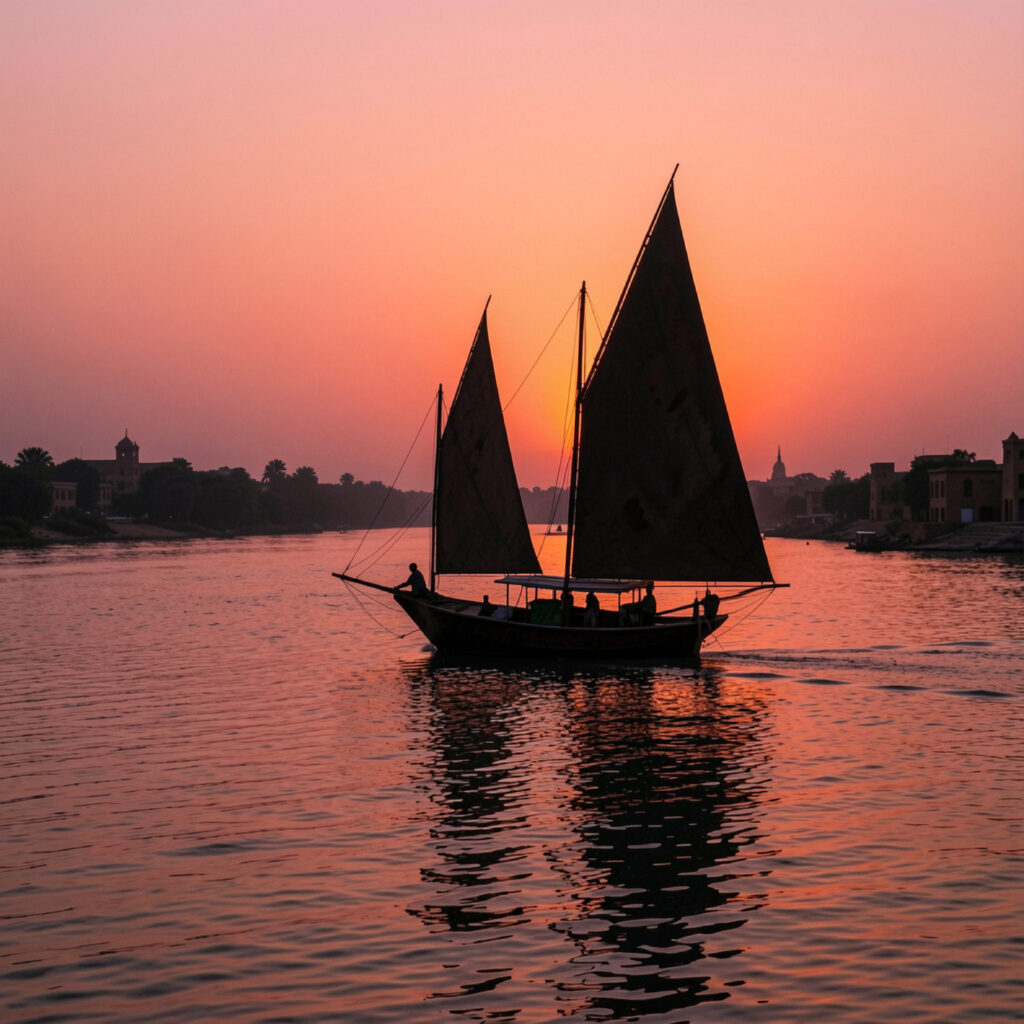
A felucca drifting on the Nile at dusk near Aswan. Suggested free-stock search: “felucca Nile Aswan sunset”.
How Many Days Do You Need? A Sample Egypt Itinerary
One of the most common questions travelers ask is simply how long Egypt takes to do well. The honest answer is that the classic highlights deserve at least eight to ten days. Rushing the Pyramids, the Grand Egyptian Museum, the Nile, and the temples into a long weekend means seeing them through a car window rather than truly experiencing them.
A well-balanced itinerary might look like this: two to three days in Cairo for the Pyramids, the Sphinx, and the Grand Egyptian Museum; a flight south to Luxor for Karnak, the Valley of the Kings, and the start of your cruise; three to four nights cruising the Nile down to Aswan, stopping at temples along the way; and a day or two in Aswan, with an excursion to Abu Simbel. Add a Red Sea extension if you want beach time at the end.
Actionable tip: If your time is tight, prioritise Cairo plus a short Nile cruise over trying to see everything — depth beats breadth in Egypt. If you have two weeks, you can travel at a relaxed pace and still add the Red Sea or the desert oases. A specialist can flex the itinerary to match your exact dates and interests.
The Trip of a Lifetime, Right on Time
There has rarely been a better moment to see Egypt. The Pyramids are as awe-inspiring as ever, the Grand Egyptian Museum has transformed Cairo into a genuine must-see, and a Nile cruise remains one of travel’s great romantic experiences.
The takeaways: start in Cairo with the Pyramids and the GEM, sail the Nile between Luxor and Aswan, build in Abu Simbel if you can, travel in the cooler months, and go with expert guides who bring the history alive.
Ready to walk in the footsteps of the pharaohs?
Ready to walk in the footsteps of the pharaohs?
Explore the Egyptian Splendors, The Pharaonic Experiences, and Pharaohs Insight & Dynasties packages at dvholidays.com, or email reservations@dvholidays.com to plan your Egypt to