

Somewhere on the plains below, a million hooves are about to hit the river. You are in a window seat above it all, coffee in hand, and the only decision you have to make today is which camera lens to reach for.
That is the promise of an East Africa safari, and it is not an exaggeration. A Kenya and Tanzania safari stitches together two of the most legendary wildlife landscapes on the planet — the Masai Mara and the Serengeti — into a single, seamless journey across an ecosystem that has barely changed in a million years. This guide walks you through where to go, what you will actually see, when to travel, and how to do it all in genuine comfort. By the end, you will know exactly why this trip sits at the top of so many bucket lists, and how to make it your own.
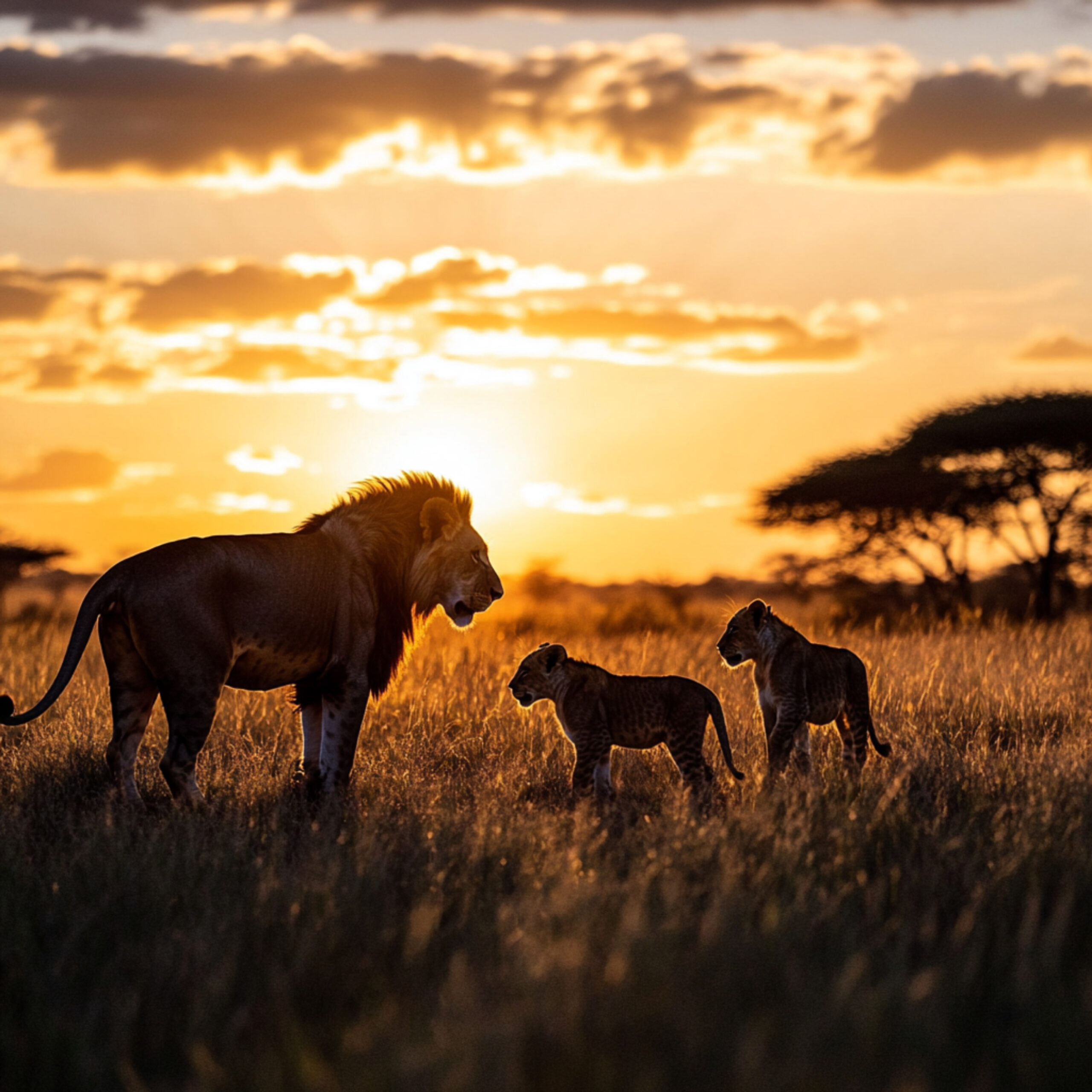
Golden hour on the Masai Mara — the classic East Africa safari image. Suggested free-stock search: “Masai Mara lions sunrise” on Unsplash or Pexels.
Why Kenya and Tanzania Belong on the Same Trip
People often ask whether they should choose Kenya or Tanzania. The honest answer from anyone who has traveled both is: do not choose. The two countries share one continuous savannah ecosystem, split only by an invisible line on a map. The animals certainly do not recognise the border — the same herds that graze Kenya’s Masai Mara in September are pounding through Tanzania’s Serengeti by December.
Combining them gives you range. Kenya delivers the dramatic, open-plain game viewing and the romance of the Mara. Tanzania adds sheer scale: the endless Serengeti, the volcanic amphitheatre of the Ngorongoro Crater, and a quieter, wilder feel in its southern reaches. Together they offer variety that a single country simply cannot match in one trip.
Actionable tip: If you have 8 to 12 days, a combined itinerary is the sweet spot. Fly between parks rather than driving the long transfers — light aircraft hops turn a punishing road day into a 45-minute flight with aerial views of the herds below.
DV Holidays builds exactly this kind of cross-border journey, pairing the Mara-focused Great Mara Adventure with our Tanzania Safari Exploration so you experience both icons without the logistical headache.
The Great Migration: Nature’s Most Spectacular Event
If there is one reason this region outranks every other safari destination, it is the Great Migration. Each year, well over a million wildebeest — joined by hundreds of thousands of zebra and gazelle — move in a vast clockwise loop between the Serengeti and the Masai Mara in search of fresh grazing and water.
The herds travel roughly 800 kilometres on this circuit, and the most heart-stopping moments come at the river crossings, where wildebeest mass on the banks before plunging into crocodile-filled waters. In the Masai Mara, these crossings typically peak between July and October.
Actionable tip: Timing is everything, but flexibility matters more than a fixed date. The migration follows the rains, not a calendar. Build a two-or-three-night stay near the Mara River so you have multiple chances to catch a crossing rather than betting everything on a single morning.
It is worth knowing that the migration is a year-round phenomenon, not a single event — the calving season on the southern Serengeti plains in January and February is just as extraordinary, with hundreds of thousands of calves born in a matter of weeks and predators never far behind.
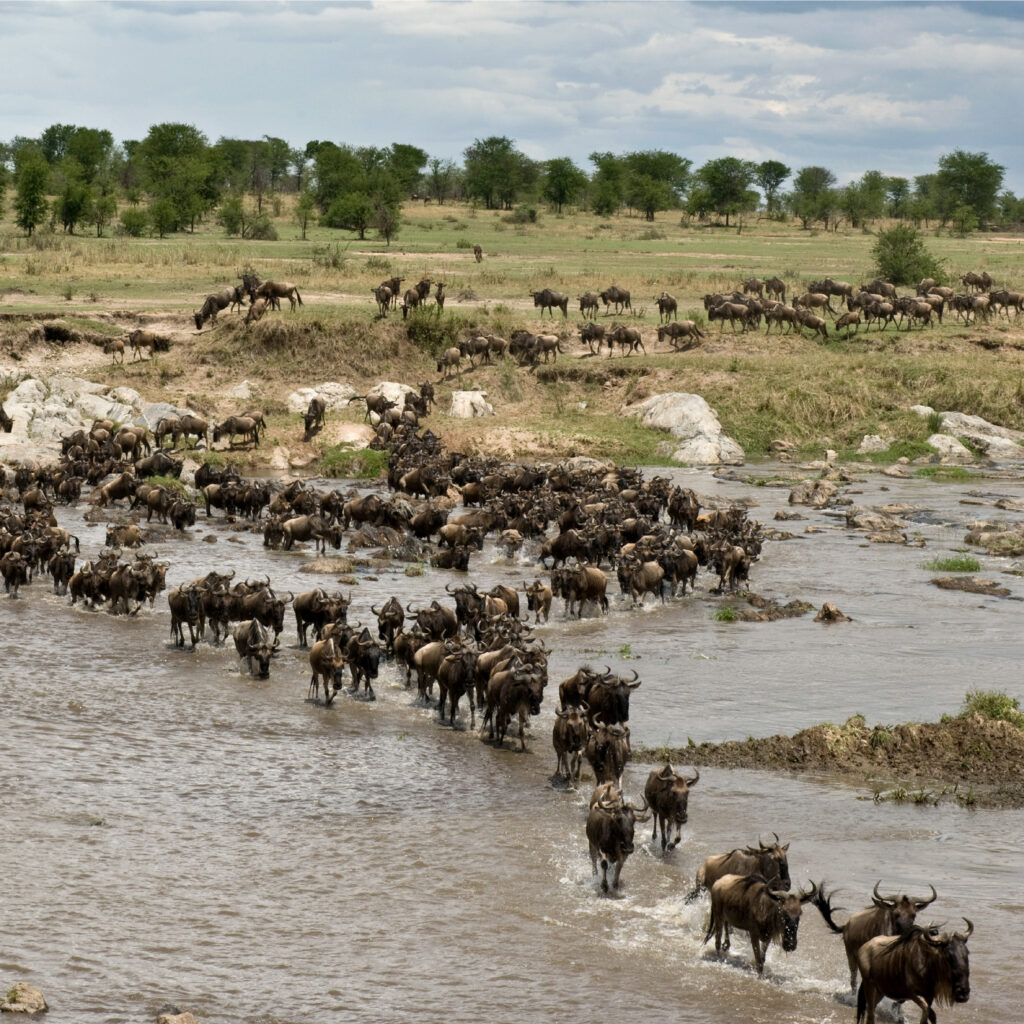
A Mara River crossing — the dramatic climax of the Great Migration. Suggested free-stock search: “wildebeest migration river crossing”.
Meeting the Big Five (and Everyone Else)
The “Big Five” — lion, leopard, elephant, buffalo, and rhino — were originally named by hunters as the most dangerous animals to track on foot. Today the only thing you will be shooting is photographs, and East Africa is one of the few places on earth where you have a realistic shot at all five.
The Masai Mara is famous for its big cats, with strong lion prides and excellent leopard and cheetah sightings on the open plains. The Ngorongoro Crater in Tanzania is one of the best places anywhere to see the critically endangered black rhino, thanks to its enclosed, protected basin. Elephants and buffalo are widespread across both countries.
Actionable tip: Do not fixate only on the Big Five. Some of the most memorable sightings are the supporting cast — a tower of giraffe at dusk, a hyena clan on a kill, or a single cheetah scanning the horizon from a termite mound. Tell your guide what excites you and let them tailor the drive.
Beyond the Wildlife: Meeting the Maasai
A safari is not only about animals. The Maasai people have lived alongside this wildlife for centuries, and a respectful cultural visit adds a dimension that photographs alone cannot capture. You will learn how a community thrives in one of the harshest environments on earth, hear about traditional cattle-herding life, and see craftsmanship up close.
Actionable tip: Choose community visits that are arranged through your operator rather than roadside stops. A well-organised village visit channels money directly into local schools and conservation, and it tends to be far more genuine and less transactional.
These cultural encounters are woven into the DV Holidays Great Mara Adventure itinerary, so the human story of the savannah sits alongside the wildlife rather than feeling like an afterthought.
When Should You Go? Reading the Seasons
East Africa is a year-round destination, but the experience changes dramatically with the seasons. The long dry season, roughly June to October, is the classic safari window: vegetation thins out, animals cluster around water, and the Mara River crossings reach their peak. This is also the busiest and priciest time, so book early.
The green season, from November through to March, brings lush scenery, newborn animals, fantastic birdlife, and noticeably lower rates. Yes, there are short afternoon showers, but mornings are often clear and the crowds thin out beautifully.
Actionable tip: If your priority is the river crossings, target July to October. If you care more about value, photography in soft light, and having sightings to yourself, the green season is a genuinely underrated choice. Either way, the shoulder months of June and November often deliver the best balance of weather, wildlife, and price.
Safari in Comfort: What “Luxury” Really Means Here
Forget any image of roughing it. A modern luxury safari means waking to fresh coffee delivered to your tent, returning from a morning drive to a hot shower and a proper meal, and falling asleep to the sound of the bush with nothing but quality canvas between you and the stars.
The best camps are small and intentionally remote, positioned for prime game viewing and run by guides who know the territory intimately. Private vehicles, expert trackers, and unhurried days are what separate a great safari from a rushed one.
Actionable tip: Ask how many guests share a game-drive vehicle. Smaller is better — it means everyone gets a window seat, the guide can follow your interests, and you are not waiting on a crowd at every sighting. This single detail shapes the entire experience.
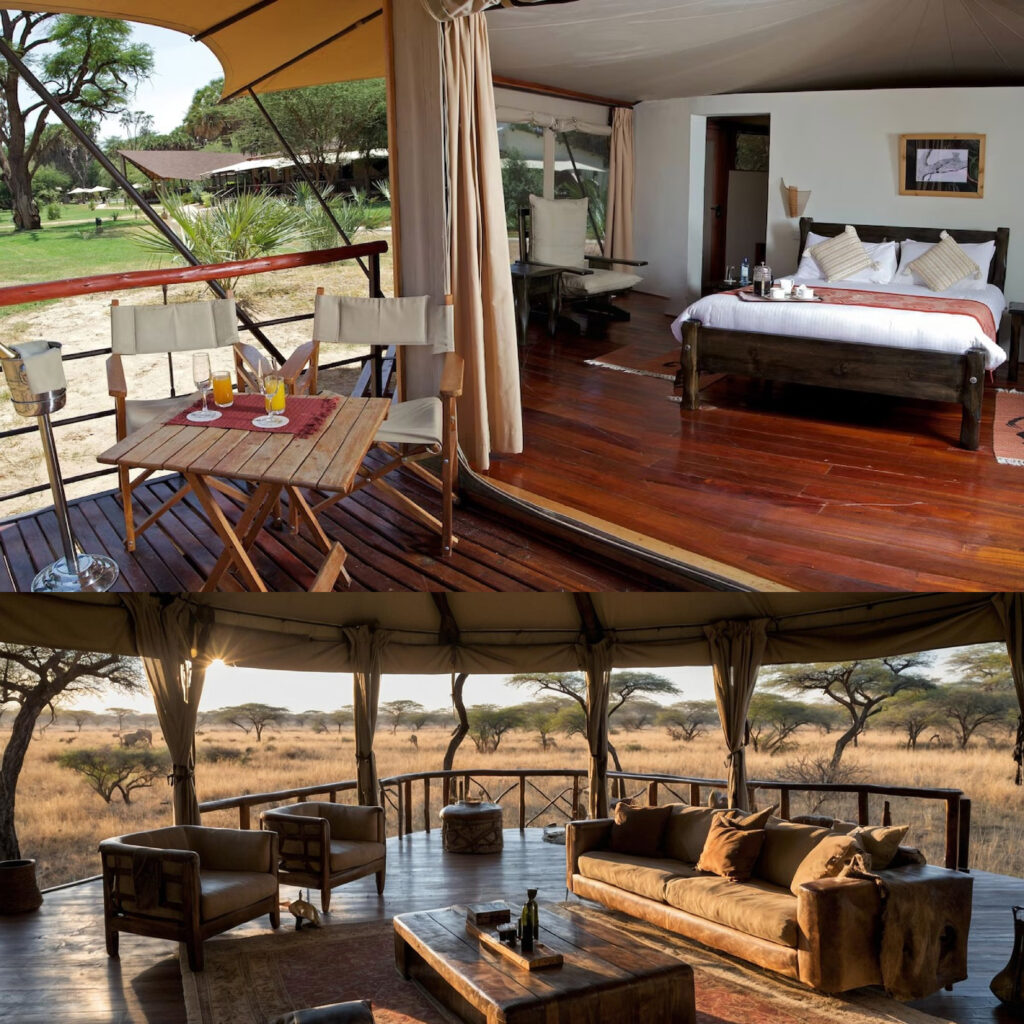
Comfort in the wild — a tented camp at dusk. Suggested free-stock search: “luxury safari tent Serengeti”.
Practical Planning: Health, Flights, and Packing
A few logistics make the difference between a smooth trip and a stressful one. Most travelers fly into Nairobi (Kenya) or Kilimanjaro (Tanzania), then connect to the parks by light aircraft. Check current visa and vaccination requirements well ahead of departure, as these can change and some are time-sensitive.
Actionable tip: Pack neutral colours (khaki, olive, beige), a warm layer for chilly dawn drives, a wide-brimmed hat, and a good pair of binoculars — one pair per person, not one to share. Soft-sided duffel bags are essential because light aircraft have strict weight and shape limits for luggage.
Because the requirements and internal flight schedules shift, this is exactly where a specialist operator earns its keep. DV Holidays handles the inter-park flights, park fees, and timing so the only thing you carry is your camera.
Travelling Responsibly: How Your Safari Protects the Wild
Here is something that makes a safari even more rewarding: done right, your trip actively helps protect the very wildlife you came to see. Tourism is one of the biggest economic reasons to keep these vast ecosystems wild rather than converting them to farmland. Park fees fund anti-poaching patrols, and community conservancies — especially around the Masai Mara — pay local landowners to keep their land open for wildlife, giving them a direct stake in conservation.
The model is increasingly proving that living wildlife is worth more than poached wildlife, and that local communities thrive when they are partners in protecting it rather than pushed aside by it.
Actionable tip: Choose camps and operators that work within community conservancies or contribute to conservation projects, and ask how they support local employment and wildlife protection. Keep a respectful distance from animals, never pressure a guide to get too close for a photo, and avoid buying souvenirs made from wildlife. Small, conscious choices mean your trip leaves the savannah better than you found it.
Your Adventure Starts Here
A Kenya and Tanzania safari is one of those rare trips that genuinely lives up to the hype. You come for the Great Migration and the Big Five; you leave changed by the scale of it all — the silence of the plains at dawn, the dust kicked up by a thousand wildebeest, the eye contact with a lion ten feet from your vehicle.
The key takeaways: combine both countries if you can, travel in the season that matches your priorities, choose small camps and small vehicles, and let a specialist manage the logistics so you can simply be present for the magic.
Ready to plan your East Africa safari?
Explore the Great Mara Adventure and Tanzania Safari Exploration packages at dvholidays.com, or email us at reservations@dvholidays.com to start building your custom itinerary today.